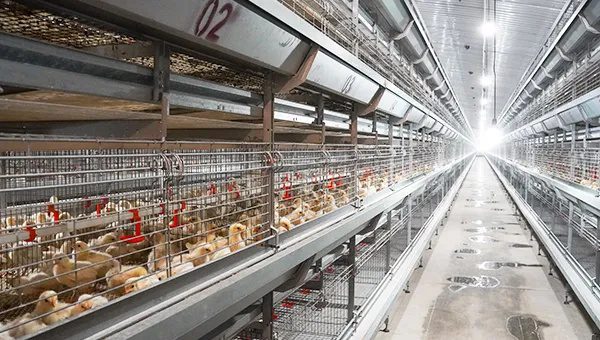
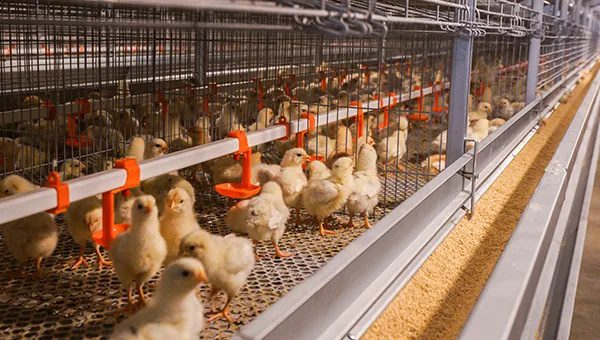
Effective poultry climate control systems are essential for maintaining optimal bird health, maximizing production efficiency, and ensuring profitability. This guide covers design principles, equipment selection, and operational best practices for modern climate control installations.
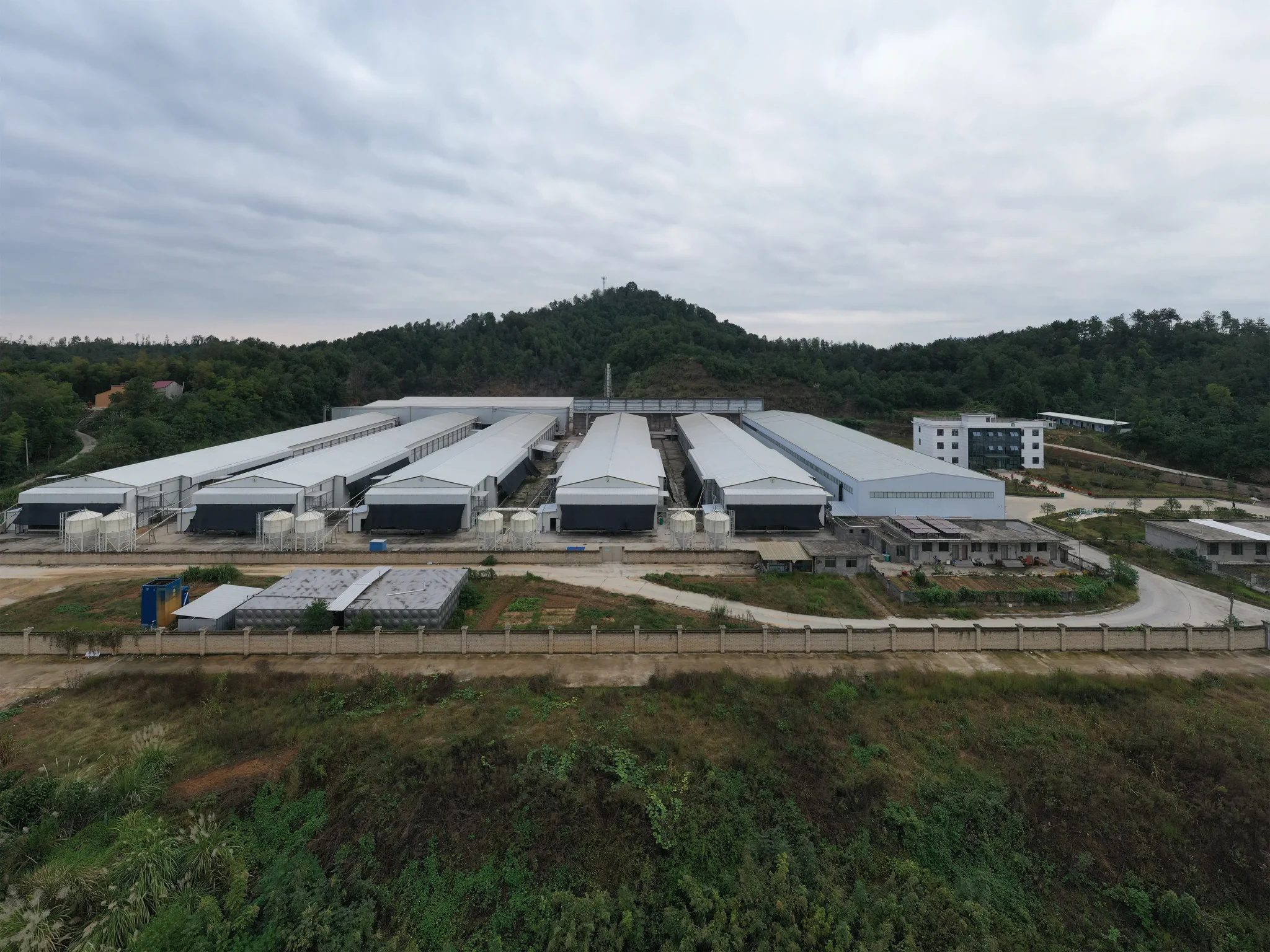
Poultry Climate Control Systems: Understanding Bird Requirements
Poultry birds have specific environmental needs that vary by age, breed, and production stage. Climate control systems must address multiple parameters simultaneously:
Temperature Management:
- Broilers: 33-35°C at hatch, decreasing to 20-22°C at market weight
- Layers: 18-24°C for optimal egg production
- Uniformity within ±1.5°C across the house
Humidity Control:
- Ideal range: 60-70% relative humidity
- Prevents respiratory issues and feather picking
- Reduces dust and ammonia accumulation
Air Quality Standards:
- Ammonia: below 20 ppm
- Carbon dioxide: below 3,000 ppm
- Dust particles: PM2.5 below 100 µg/m³
Air Speed Requirements:
- Summer: 2.0-3.0 m/s at bird level
- Winter: 0.2-0.5 m/s for gentle air movement
- Uniform distribution prevents cold spots
Modern control systems integrate sensors throughout the house, providing real-time data for automated adjustments and early problem detection.
Climate Control System Components
Complete climate control systems consist of interconnected components working together:
Ventilation Equipment:
- Exhaust fans (variable speed, 36-48 inch diameter)
- Air inlets (ceiling or wall-mounted, adjustable)
- Circulation fans for air mixing
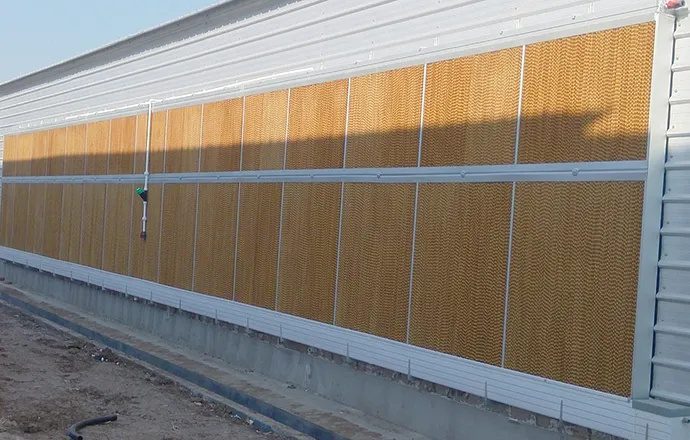
- Cooling pads for evaporative cooling
Sensors and Monitoring:
- Temperature sensors (multiple zones)
- Humidity and dew point sensors
- Ammonia and CO2 detectors
- Air velocity meters
Control Systems:
- Central controllers with programmable logic
- Touchscreen interfaces for manual override
- Remote monitoring and alert systems
- Data logging for performance analysis
Automation Integration:
- Automatic curtain operation
- Feed and drinker system coordination
- Lighting system synchronization
- Emergency backup power systems
Quality components from reputable manufacturers ensure reliability and reduce maintenance requirements over the system’s 10-15 year lifespan.
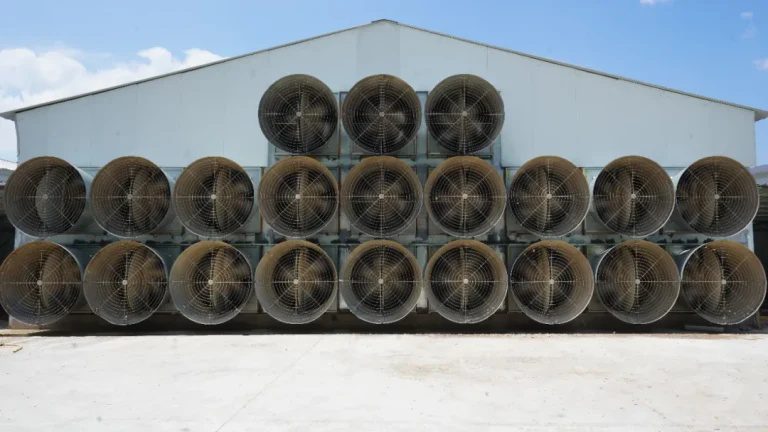
Tunnel Ventilation System Design
Tunnel ventilation is the preferred design for modern poultry houses due to superior cooling efficiency and air quality control:
Design Principles:
- Air travels from one end of the house to the other
- Creates uniform air speed across the entire building
- Maximum air exchange rates up to 1 air change per minute
Sizing Calculations:
- Fan capacity: 800-1,200 CFM per ton of birds
- Inlet area: 1.5-2.0 square feet per 1,000 CFM
- Cooling pad area: 1.5 square feet per 1,000 CFM
Air Speed Targets:
- Summer cooling: 2.0-3.0 m/s (400-600 ft/min)
- Transition periods: 1.0-1.5 m/s
- Winter minimum ventilation: 0.2-0.5 m/s
Inlet Configuration:
- Ceiling inlets provide uniform air distribution
- Adjustable openings prevent drafts during cold weather
- Deflector plates direct air appropriately
Tunnel systems remove heat, moisture, and contaminants efficiently while maintaining consistent environmental conditions for optimal bird performance.
Winter Ventilation Strategies
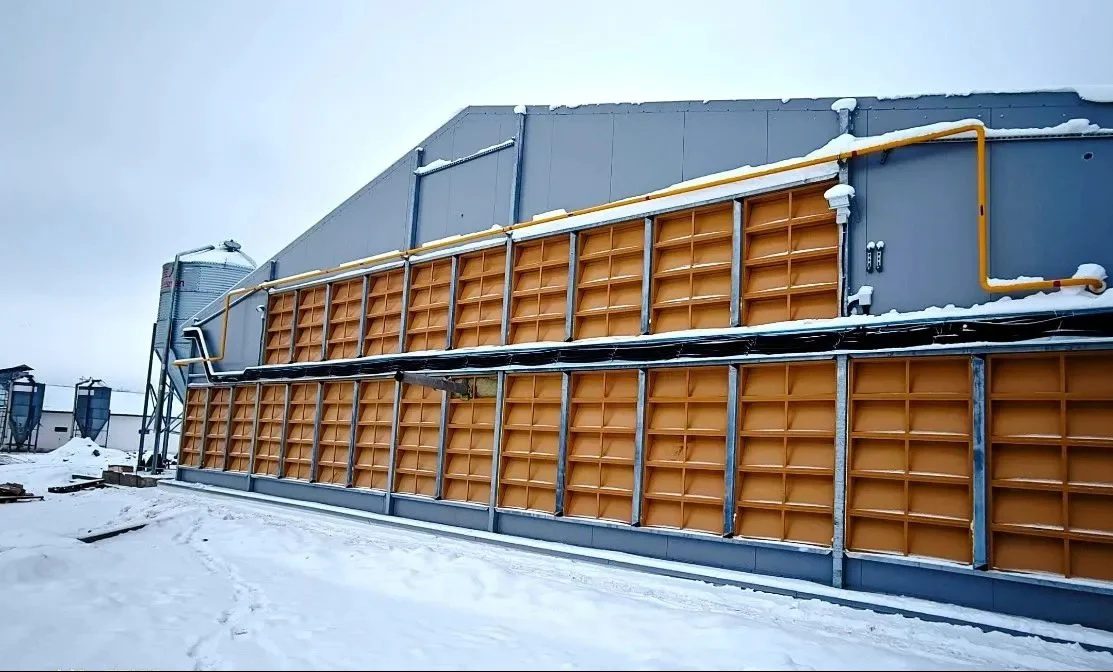
Effective winter ventilation removes moisture and contaminants without creating cold stress:
Minimum Ventilation Setup:
- Run 2-3 exhaust fans continuously at low speed
- Maintain air speed of 0.2-0.5 m/s
- Provide 0.5-1.0 cubic meters per hour per bird
Air Inlet Management:
- Partially close inlets to maintain air velocity
- Direct air toward ceiling for gradual mixing
- Prevent cold drafts from reaching bird level
Moisture Control:
- Monitor humidity levels continuously
- Increase ventilation if humidity exceeds 70%
- Use minimum ventilation timers for consistent air exchange
- Insulate pipes to prevent condensation
Proper winter ventilation maintains bird health while minimizing heating costs and preventing cold stress-related mortality.
Summer Cooling Strategies
Evaporative cooling systems manage heat stress during hot weather:
Cooling Pad Systems:
- Cellulose pads: 10-12 cm thickness, 60-90% efficiency
- Water flow: 3-5 gallons per minute per linear foot
- Pad area: 0.5-0.7 square feet per 1,000 CFM fan capacity
Air Speed Requirements:
- Target 2.0-3.0 m/s at bird level
- Adjust based on bird age and temperature
- Use circulation fans to prevent dead zones
Temperature Limits:
- Evaporative cooling effective up to 40°C ambient temperature
- Achieves 6-8°C temperature reduction
- Maintain house temperature below 28°C for optimal performance
Backup Cooling:
- High-pressure fogging systems for extreme heat
- Emergency ventilation protocols for equipment failure
- Shade structures for outdoor components
Effective summer cooling prevents heat stress, maintains feed conversion ratios, and reduces mortality rates during peak production periods.
Sensor Placement and Monitoring
Strategic sensor placement ensures accurate environmental control:
Temperature Sensor Locations:
- Bird level: 5-10 cm above floor
- Multiple zones: at least one sensor per 10 meters
- Near inlets and exhaust fans for gradient monitoring
- Avoid direct sunlight or heat sources
Air Quality Monitoring:
- Ammonia sensors at bird level near manure areas
- CO2 sensors at multiple heights throughout house
- Dust sensors near feeding areas
- Continuous monitoring with alarm thresholds
Data Logging Requirements:
- Record temperature, humidity, and air quality every 15 minutes
- Maintain 30-day historical data for analysis
- Set automatic alerts for parameter deviations
- Generate weekly performance reports
Automated monitoring systems provide early warning of potential problems and enable data-driven decision making for continuous improvement.
Poultry Climate Control Systems: Integration with Cage and Feeding
Climate control systems work in coordination with other poultry house systems:
Feeding System Integration:
- Adjust feed delivery timing based on environmental conditions
- Reduce feed during heat stress periods
- Coordinate feeding times with ventilation cycles
Lighting System Coordination:
- Synchronize lighting programs with temperature management
- Reduce light intensity during heat events
- Coordinate dawn/dusk transitions with ventilation adjustments
Water System Integration:
- Monitor water consumption as temperature indicator
- Adjust water pressure based on air temperature
- Provide electrolyte supplements during heat stress
Manure Management Coordination:
- Coordinate ventilation with manure removal cycles
- Increase ventilation after manure belt operation
- Schedule cleaning during optimal temperature periods
Integrated systems optimize overall house performance and reduce manual intervention requirements.
Energy Efficiency Considerations
Design climate control systems for long-term energy efficiency:
Fan Selection:
- Variable speed fans for precise airflow control
- Energy-efficient motors (IE3 or higher)
- Regular maintenance to maintain efficiency
- Use 36-inch fans instead of 48-inch when possible
Cooling Pad Optimization:
- Use recirculating water pumps with variable speed
- Install water treatment to prevent pad degradation
- Cover pads during winter to reduce heat loss
- Regular cleaning maintains cooling efficiency
Insulation and Air Tightness:
- Proper roof insulation significantly reduces heating energy consumption
- Seal air leaks to prevent uncontrolled ventilation
- Use thermal curtains for seasonal adjustment
- Regular leak detection and repair programs
Smart Controls:
- Programmable controllers optimize energy usage
- Demand-based ventilation reduces unnecessary fan operation
- Automated temperature setback during low production periods
- Remote monitoring eliminates unnecessary site visits
Energy-efficient design lowers long-term operating costs while maintaining optimal bird performance. For an energy savings analysis specific to your facility, contact YMAKO’s engineering team with your project specifications.
Related Poultry Climate Control Systems and Equipment
YMAKO provides integrated solutions for complete poultry house automation:
- Broiler Cage Systems with integrated climate control
- Layer Cage Systems designed for optimal environmental management
- Tunnel Ventilation Design Guides and technical resources
- Industry Articles and case studies
Conclusion: Poultry Climate Control Systems for Commercial Farms
Effective poultry climate control systems require careful design, quality components, and ongoing management. By implementing tunnel ventilation, maintaining proper sensor placement, integrating with other house systems, and prioritizing energy efficiency, commercial poultry operations can achieve consistent bird performance while minimizing operating costs. First, the right poultry climate control systems design lowers mortality. Second, it reduces feed conversion variance. Finally, it stabilizes egg weight in layers and market weight in broilers. Regular training of staff and staying updated with industry best practices ensures long-term success in competitive markets. In summary, poultry climate control systems are the most cost-effective upgrade a commercial farm can make in 2026.
—
FAQ
What is the ideal temperature for broiler chickens?
Maintain 33-35°C during the first week, gradually reducing to 20-22°C by market weight. Automated climate control systems should maintain uniform temperature within ±1.5°C across the house.
How does tunnel ventilation work?
Tunnel ventilation pulls air through one end of the house using exhaust fans, creating uniform air flow at 2.0-3.0 m/s across the entire building. This design removes heat, moisture, and contaminants efficiently while maintaining consistent environmental conditions.
What size cooling pads do I need for my poultry house?
Install 0.5-0.7 square feet of cooling pad area per 1,000 CFM of fan capacity. Use cellulose pads 10-12 cm thick with 60-90% efficiency. Water flow should be 3-5 gallons per minute per linear foot of pad.
How often should I replace sensors in my climate control system?
Replace temperature sensors every 3-5 years and air quality sensors (ammonia, CO2) every 2-3 years. Regular calibration every 6 months ensures accuracy. Consider annual maintenance contracts with qualified technicians.
What is the difference between minimum and tunnel ventilation?
Minimum ventilation provides gentle air exchange during cold weather (0.2-0.5 m/s) to remove moisture and contaminants without creating cold stress. Tunnel ventilation provides high air speeds (2.0-3.0 m/s) during hot weather for effective cooling through evaporation and air movement.