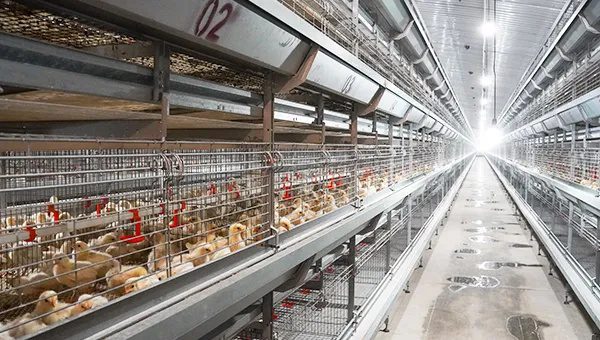
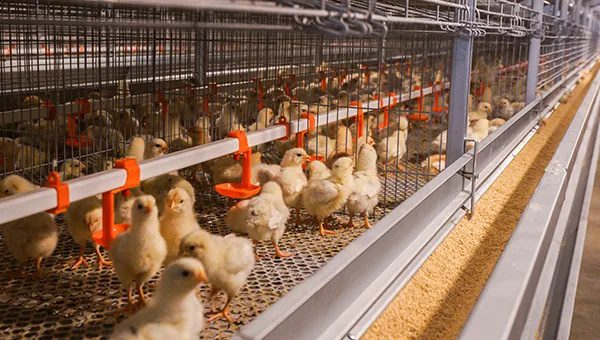
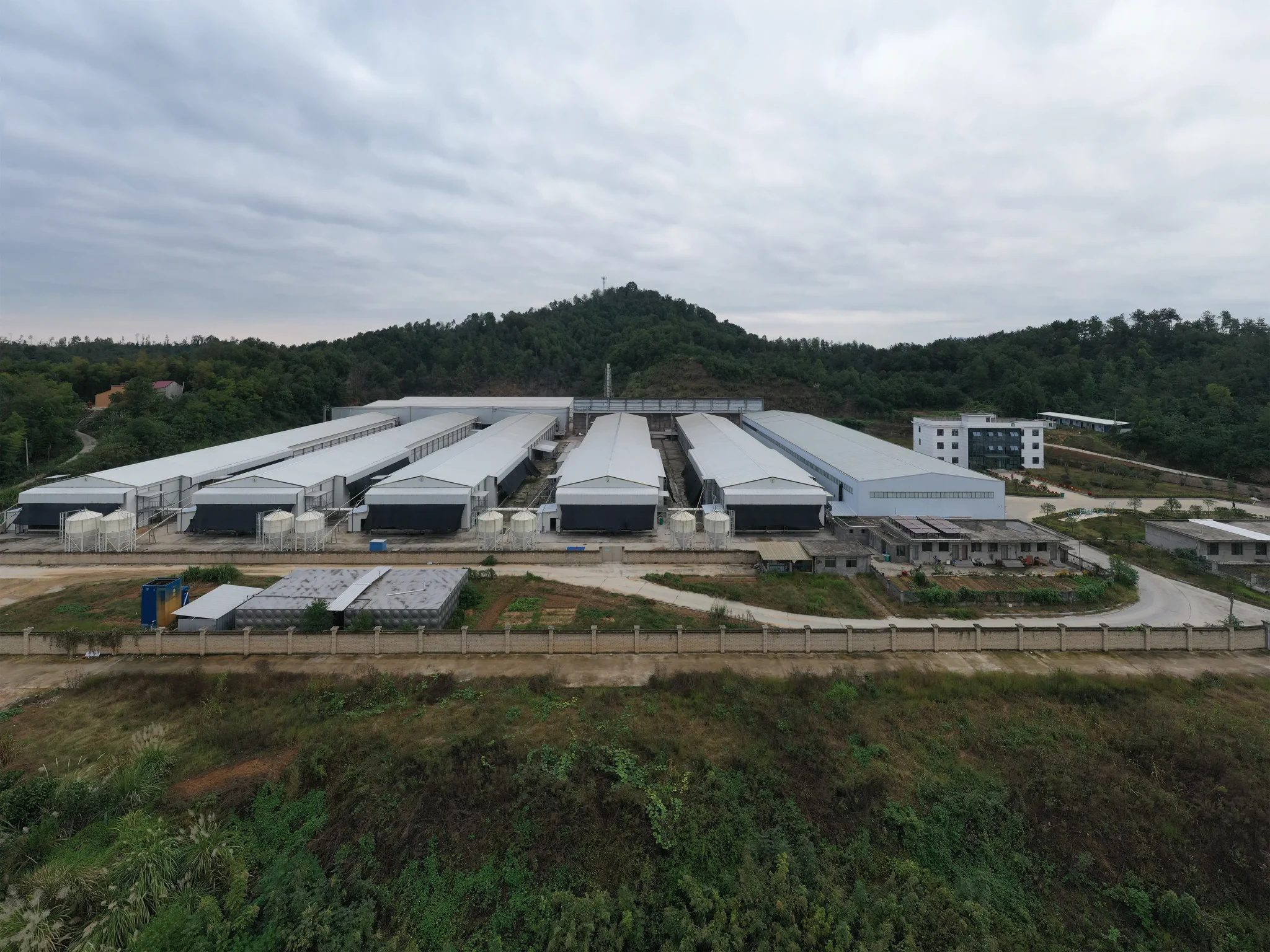
An egg production system is the full set of housing, cage, feeding, watering, climate, lighting, and egg collection equipment that runs a commercial layer flock from day-old pullet to end-of-lay. The system is judged on one number: peak lay rate, measured as a percentage of hens laying per day. A well-designed system keeps a flock at 95%+ peak lay for 8-12 weeks, then declines slowly to 80% by week 60-70, when the flock sells for meat. A poorly designed system drops below 90% by week 30, which is the difference between a profitable year and a loss.
What Are Egg Production Systems
An egg production system combines housing, cages, feeding, watering, climate, lighting, and egg collection equipment. It runs a commercial layer flock from day-old pullet to end-of-lay. The system succeeds when it keeps a flock above 90% lay for most of the production cycle.
Main Types: Cage vs Cage-Free vs Free-Range
The choice of system drives everything else. House size, climate setup, feeding line, egg collection, and labor all depend on this decision.
- A-type layer cage: 4 birds per cage, 2 rows of cages back-to-back per unit, 2.4 m trough length per unit. It is the most common starter and mid-scale system.
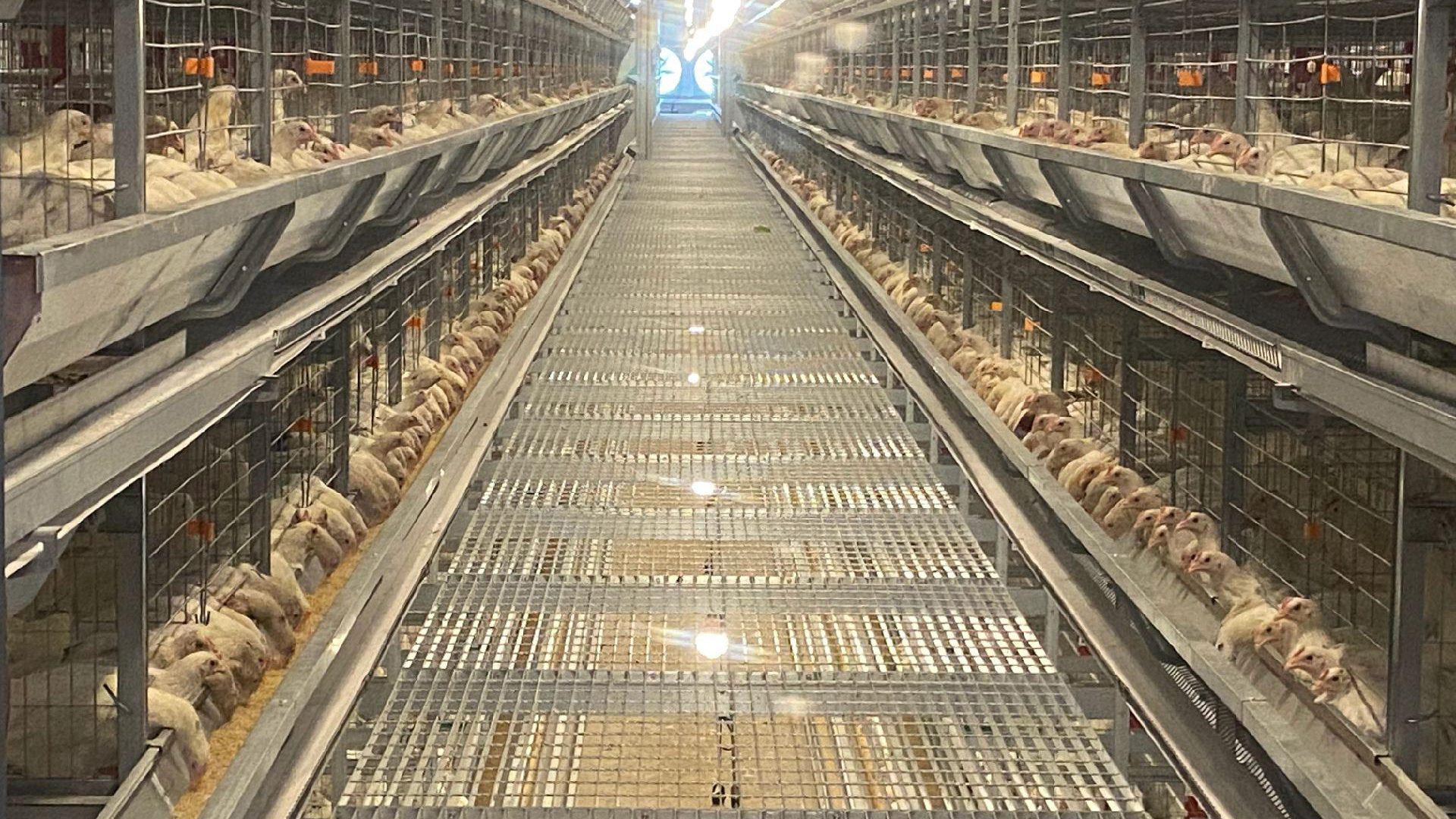
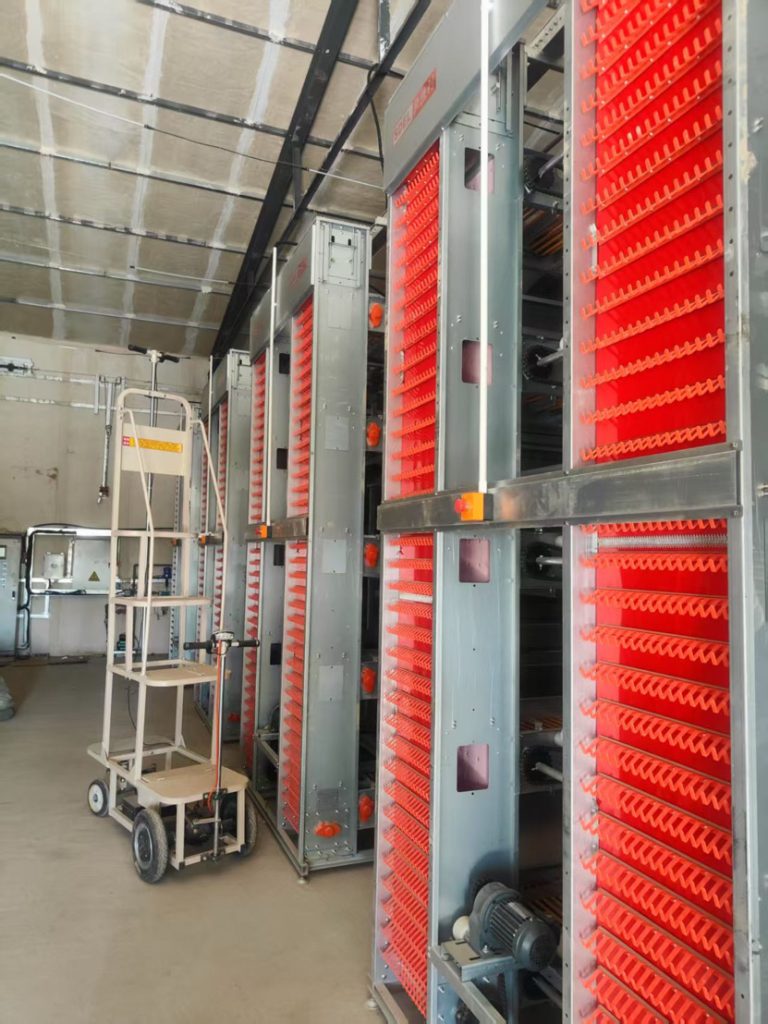
- H-type layer cage: 4-8 birds per cage, 4-8 tiers per unit, larger footprint in height, and much higher bird density per m² of floor.
- Cage-free / aviary: birds live loose in the house with nest boxes and manure belts. Eggs fetch 2-3x the price in premium markets, but capital cost is significantly higher than cage systems, and lay rate is 5-8% lower.
For most export markets in Africa, Southeast Asia, and Central Asia, A-type and H-type dominate because of cost, density, and ease of management. In a commercial farm in 2026, the choice usually runs as follows: A-type for under 30,000 birds, H-type for 30,000-200,000, and aviary only if a clear premium-egg buyer exists.
Egg Production Systems Capacity and Bird Density
Bird density is the trade-off between revenue per square meter and bird welfare. Too tight, and birds fight, feathers fray, and lay rate drops, while mortality rises. Too loose, and the cost per egg is too high.
A-type layer cage density targets:
- White layers: 450-550 cm² per bird (18-22 birds/m²)
- Brown layers: 500-600 cm² per bird (16-20 birds/m²)
H-type layer cage density targets:
- White layers: 400-450 cm² per bird (22-25 birds/m²)
- Brown layers: 450-500 cm² per bird (20-22 birds/m²)
For a 30,000-bird A-type farm, you need roughly 1,500 m² of floor. For 30,000 birds in H-type, you need 750-1,000 m² of floor because the tiers stack vertically. H-type also uses belt manure removal, so the manure dries on the belt and ships out as organic fertilizer or compost feedstock. A-type relies on scraper or deep-pit manure, which is more labor.
Climate Control for Maximum Egg Yield
Layers lay best at 18-24°C with 60-70% humidity. Above 28°C, feed intake drops, and egg weight falls. Below 14°C, birds burn feed to stay warm, and conversion ratio worsens. The climate system must hold these targets year-round, and the system cost varies by region, equipment specification, and house size. Final pricing depends on actual project configuration and customization requirements.
Tunnel ventilation is the standard for warm climates. Air enters through cooling pads at one end, and exhaust fans pull it across the house at 2.0-3.0 m/s. This creates wind-chill cooling on the birds, and it holds house temperature 6-8°C below outside ambient. For a 10,000-bird closed house climate system, equipment selection depends on house size, automation level, and regional installation conditions. Final pricing depends on actual project configuration and customization requirements.
Minimum ventilation runs in cold weather. Fans run on a timer at low speed, and they bring in just enough fresh air to remove moisture and ammonia. Air moves at 0.2-0.5 m/s, and the inlets direct air along the ceiling so it mixes before reaching bird level.
Feeding and Watering Integration
A 30,000-bird layer flock eats 3.3-3.6 tonnes of feed per day. A modern feeding line delivers this in 2-3 cycles, and it spreads feed evenly along the trough. The auger or chain conveyor fills the trough in under 10 minutes, and the trough level is adjustable so birds cannot scratch feed onto the floor.
A laying hen drinks 1.6-2.0x her feed intake by weight, so a 30,000-bird flock drinks 5,300-7,200 liters per day. The nipple drinker line delivers this with no spillage, and the pressure regulator keeps flow at 40-60 ml/min per nipple. Daily water meter readings catch disease early, because sick birds stop drinking 24 hours before they stop eating.
Egg Collection and Grading
Egg collection is where labor savings show up.
- Manual collection: Workers walk the aisles with carts and pick eggs by hand. They spend 1-2 hours per 1,000 birds, so a 30,000-bird farm needs 4-6 workers just for collection. This is the standard for A-type farms under 30,000 birds.
- Belt collection: Eggs roll out of the cage onto a soft PP belt, which moves them to the grading room. This approach significantly reduces labor compared to manual collection. It is common in H-type farms over 30,000 birds.
- Vertical elevator + central collection: Eggs from each tier drop onto a vertical lift, then move to a central conveyor. The system handles 40,000-45,000 eggs per hour, and it scales to 200,000+ bird farms.
After collection, eggs travel to the grading room. Graders weigh, candle, and sort each egg, and they then pack eggs into trays or cartons. A 30,000-bird farm produces 26,000-28,000 eggs per day at peak lay.
Frequently Asked Questions
What is the most common egg production system for a 30,000-bird farm?
A-type layer cage system is the most common starting point. For higher density and lower labor, H-type is used. Battery is for under 5,000 birds.
How long does it take to bring a pullet to peak lay?
Pullets are usually placed at 16-17 weeks, reach 50% lay at week 19-20, and hit peak (95%+) at week 24-26. End of lay is at week 70-80, depending on the local market.
What is the most cost-effective scale for an egg production system?
System cost (house, cages, feeding, climate, lighting, egg collection, grading) varies by region, labor cost, and regulatory requirements. A 30,000-bird A-type farm is the most common commercial scale. Land, water, and power infrastructure are additional considerations. Contact YMAKO with your project specifications for a detailed quotation.
What is the labor requirement?
A 30,000-bird A-type farm runs with 4-6 workers. An H-type farm of the same size runs with 2-3. Aviary needs 6-8 because birds are loose in the house.
Can an existing broiler house be converted to an egg production system?
Partially. The house shell, climate, and feeding infrastructure can be reused. The cage system, lighting, and egg collection must be replaced. Conversion cost depends on existing infrastructure condition. Contact YMAKO for a project assessment.
For sizing help or a quote tailored to your flock size and country, contact the YMAKO sales team at info@ymako.com.