YMAKO completed a 200000 layer farm commercial egg farm project in Southeast Asia — the largest 200000 layer farm project in our history. This case study covers the project background, cage system, environmental control configuration, equipment list, and measurable results.

—
200000 layer farm — Project Overview
| Parameter | Detail |
|---|---|
| Location | Southeast Asia (client anonymized) |
| Farm Type | Commercial egg production |
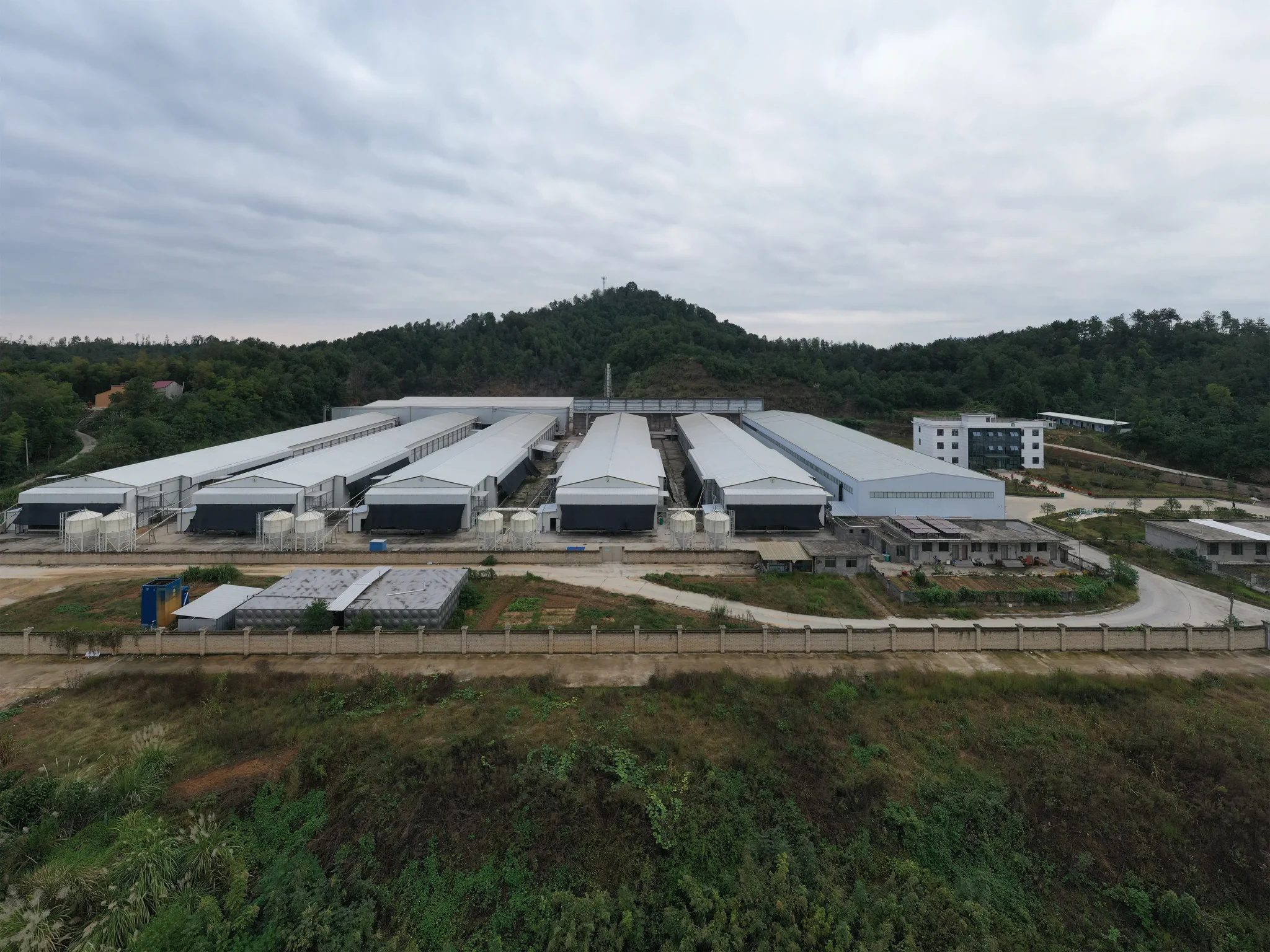
| Total Capacity | 200,000 layers |
| Houses | 5 houses, ~40,000 birds each |
| YMAKO Role | Equipment manufacturer + installation supervisor + after-sales support |
| Timeline | Designed and installed 2024–2025 |
—
Why This 200,000-Layer Project Demonstrates YMAKO’s Capability
This project is YMAKO’s benchmark for large-scale turnkey layer farm delivery. It validates four things: our ability to engineer for tropical climates, to coordinate multi-house installation, to integrate manure-to-fertilizer processing, and to support remote clients through commissioning and beyond.
—
Layer Cage System: H-Type Configuration
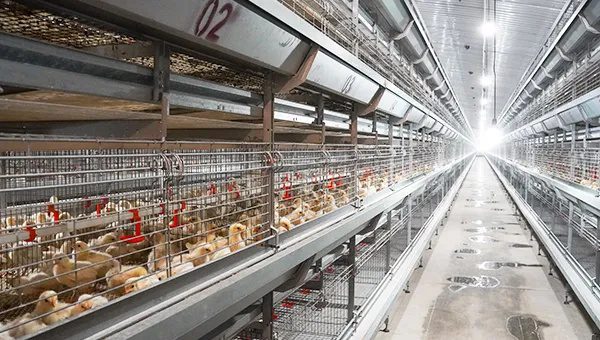
The farm uses H-type (stacked) layer cages across 5 houses. Each house holds approximately 40,000 birds in a 4-tier H-type configuration.
H-Type Layer Cage Specifications
| Parameter | Specification |
|---|---|
| Cage Dimensions | 1200 × 1250 × 690 mm |
| Birds per Unit | 32 birds (4 units, 8 birds per unit) |
| Tiers | 4-tier (can be configured 3–8 tiers) |
| Frame Material | Q235 steel, hot-dip galvanized (Z275 coating) |
| Frame Column Thickness | ≥ 2.0 mm |
| Mesh Wire (Door) | ⌀ 5.0 mm |
| Mesh Wire (Floor) | ≥ ⌀ 2.5 mm |
| Trough Thickness | ≥ 1.0 mm, stiffened structure |
| Service Life | 15–20 years with proper maintenance |
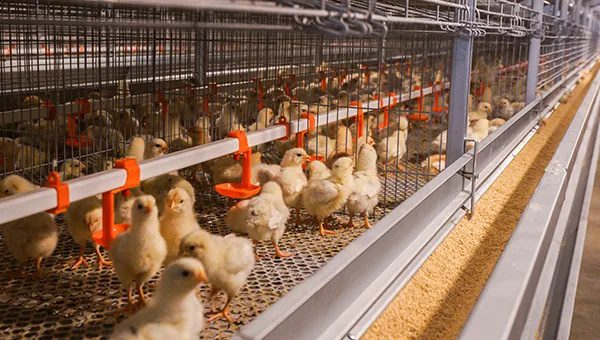
Each cage row includes the full accessory package: nest pad (≥0.8 mm), PVC feed trough, and stainless steel fasteners with 10% spare parts.
—
Automatic Feeding System
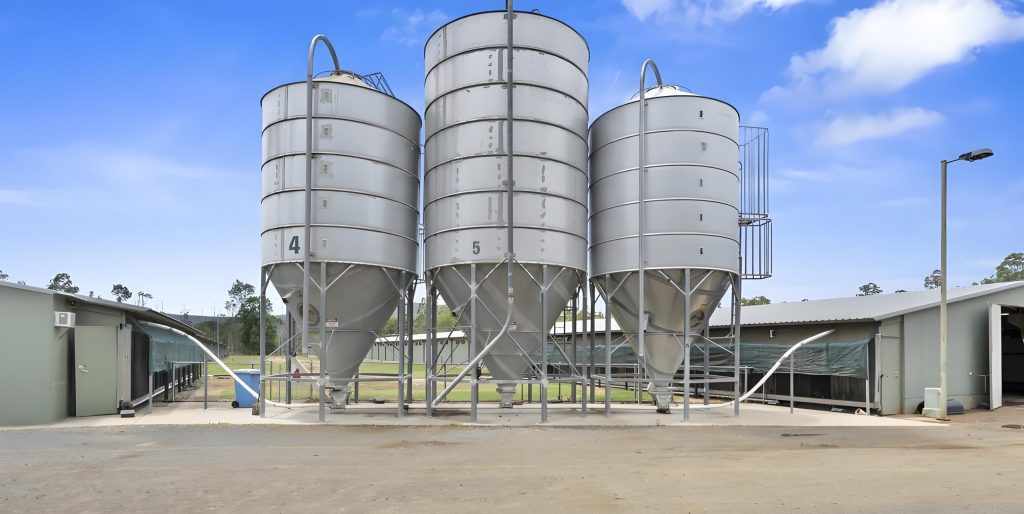
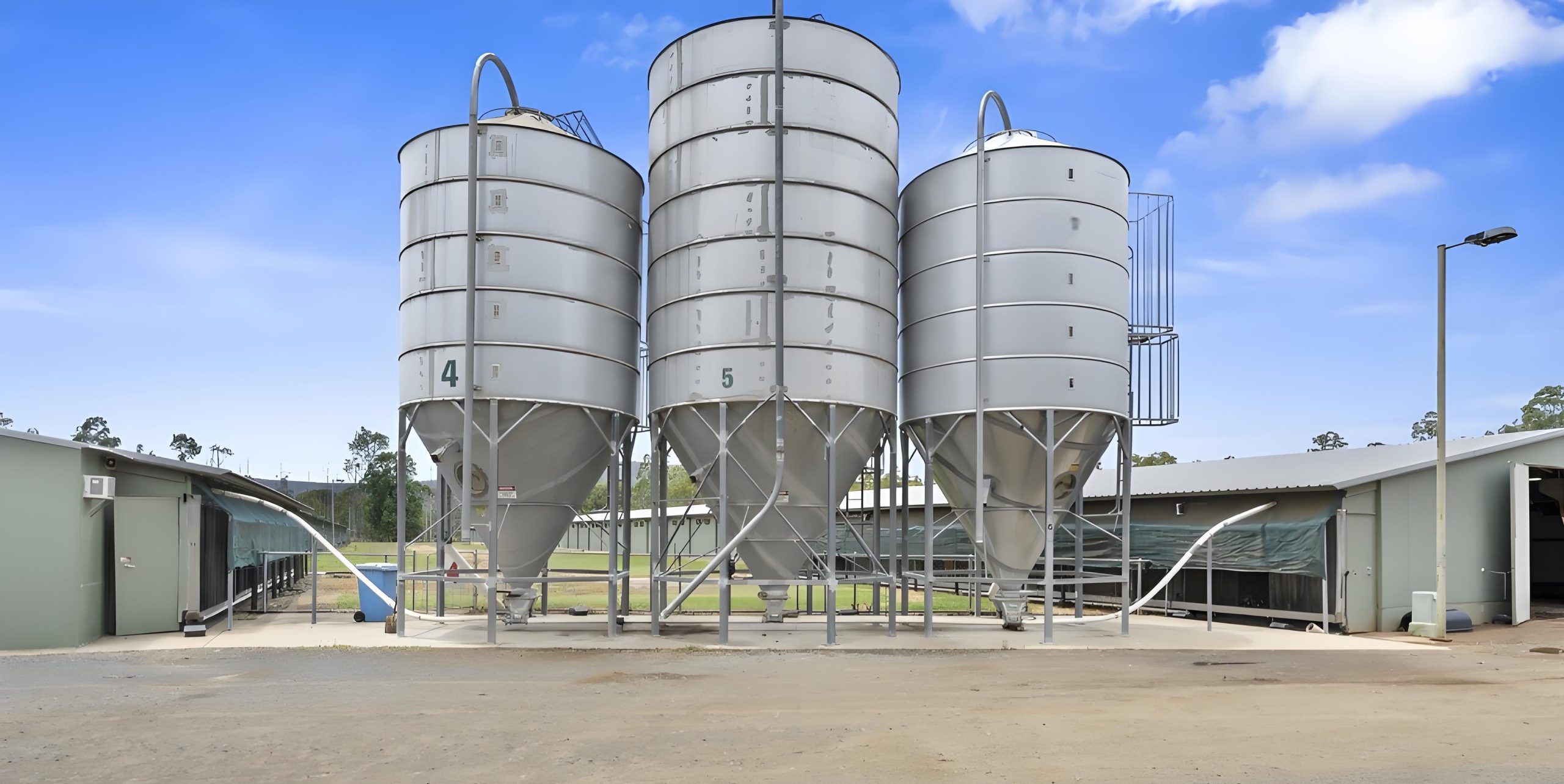
Feed is delivered from a centralized storage area to individual house silos, then distributed via chain conveyor to each cage tier.
- Feed Silo: Custom-sized HDG steel, 1.6–33.4 ton capacity options per house
- Feed Conveyor: 110 mm PVC / 140 mm HDG pipe with tandem flexible auger, gear motor 1.1 kW
- Travel Feeder: Mounted hopper ≥70 kg per unit, with outer viewing port and emergency stop
- Feed Distribution: Programmable 2–4 cycles per day, volume adjustable by bird age
- Feed Savings: Estimated 5–10% reduction vs manual feeding through precise portion control
—
Automatic Egg Collection System
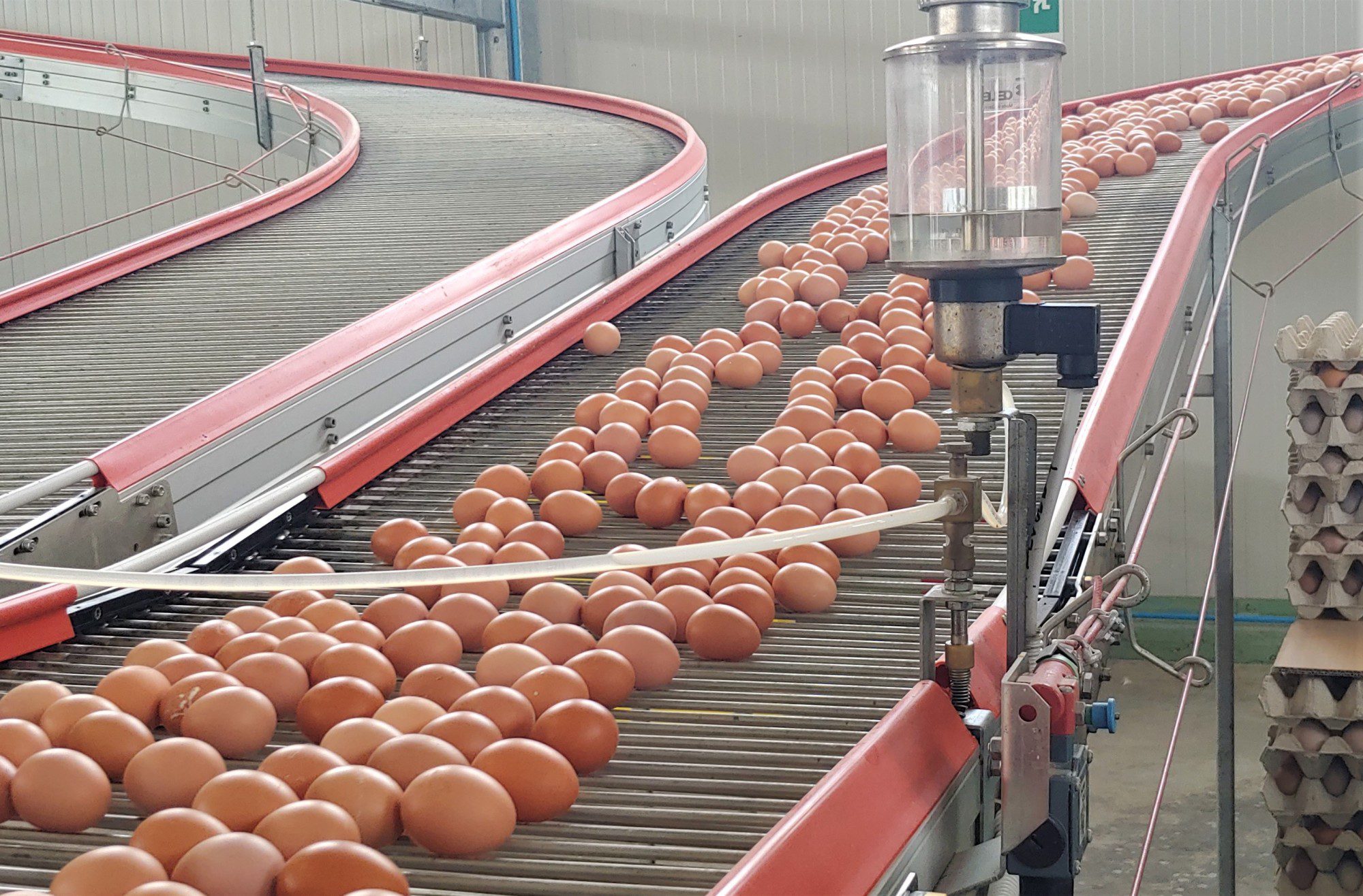
The farm uses YMAKO’s lift-type egg collection with central conveyor, handling ~170,000 eggs daily at 85% lay rate.
- Nest Conveyor Belt: Nylon, T3.0 mm, speed 3.58 m/min
- Central Egg Conveyor: Width 500 mm (overall 540 mm), capacity 40,000–45,000 eggs per hour
- Egg Sorter: Integrated soft-shell egg rejector
- Reduced Breakage: Estimated 2–3% breakage rate vs 5–8% in manual collection
—
Environmental Control System for Tropical Climate
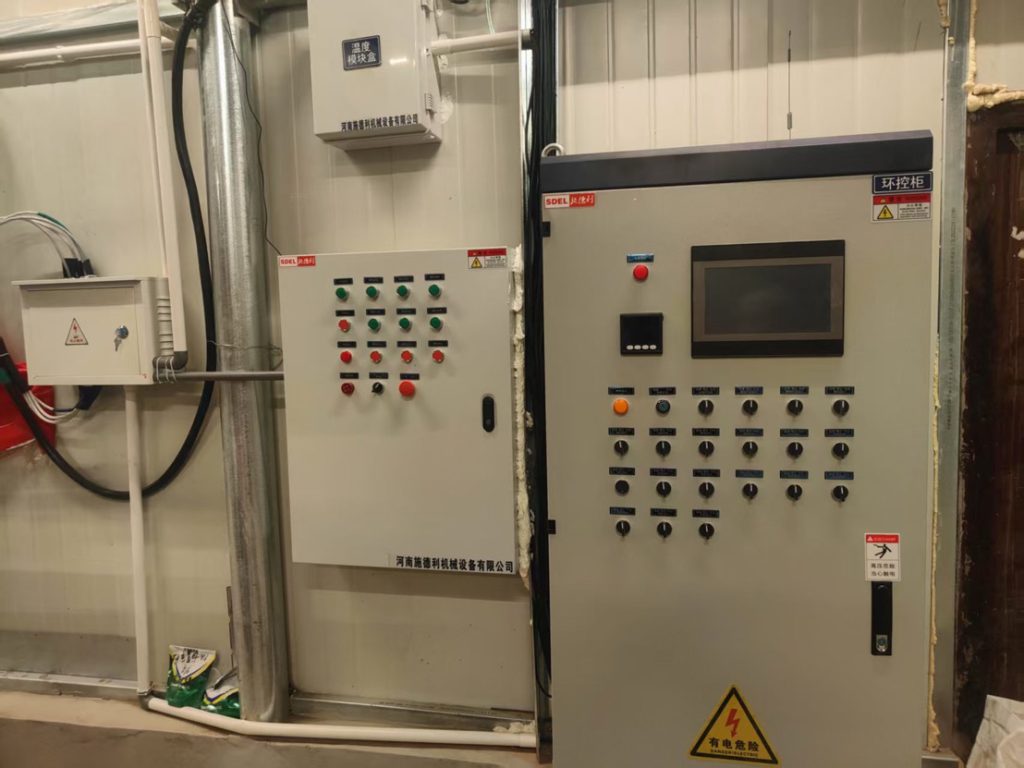
Southeast Asia’s hot and humid climate demanded a robust ventilation and cooling design.
- Exhaust Fans: 1380 × 1380 mm axial fans, 1.1 kW each, with corrosion-resistant stainless steel blades
- Cooling Pads: Cellulose pads, 150 mm thickness, aluminum alloy frame, with single-sided rodent mesh
- PLC 5.0 Controller: 4 temperature probes, 1 humidity probe, 1 CO2 probe, 1 negative pressure probe per house
- Ventilation Control: Automatic management of fans, cooling pads, vent windows, and air deflectors
- Remote Monitoring: IoT system connects up to 20 mobile phones, 3 emergency contacts, 24/7 automatic monitoring
- Alarms: Triple-layer (sound & light / SMS / phone call)
The PLC controller runs fan alternation to extend motor life and maintains negative pressure balance across all 5 houses.
—
Manure Removal and Fertilizer Integration
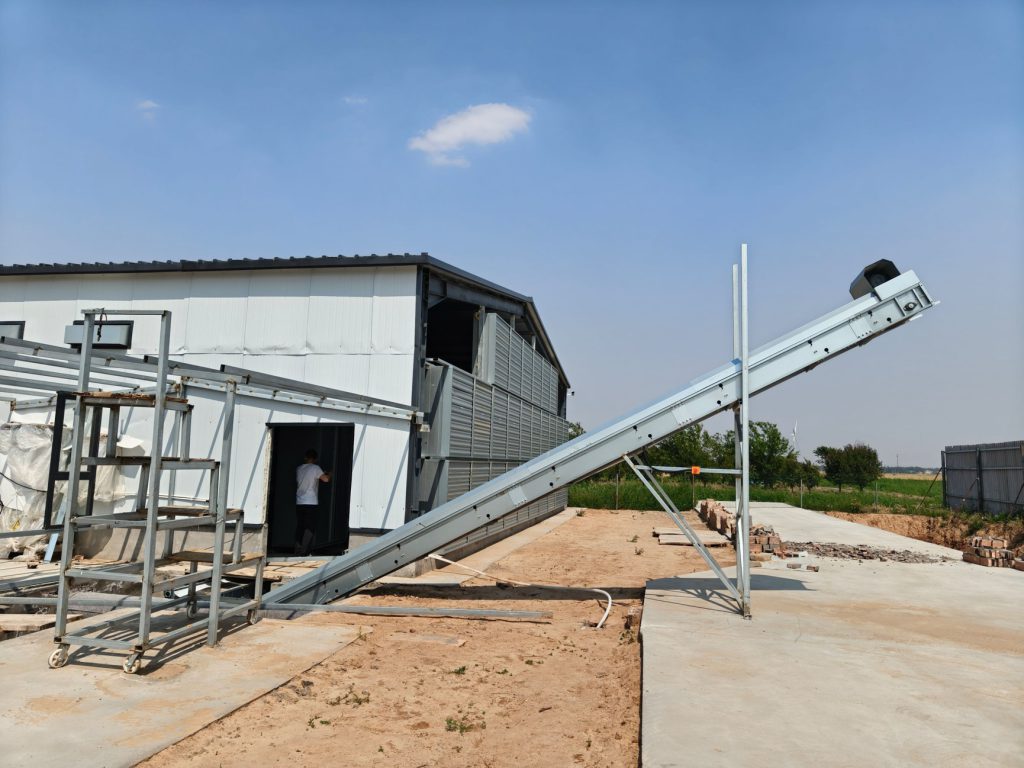
A distinguishing feature of this project is the manure-to-fertilizer integration — YMAKO’s unique capability among poultry equipment manufacturers.
- Manure Belt: PP material, T1.0 mm, running at 2.0 m/min
- Horizontal and Inclined Conveyor: PVC belt T3.0 mm, inclined length 9.0 m with rain shield
- Manure Processing: Dried manure from the belt system is collected for organic fertilizer production
- Environmental Benefit: Closed manure handling reduces ammonia and flies inside and outside the houses
—
Lighting and Control Systems
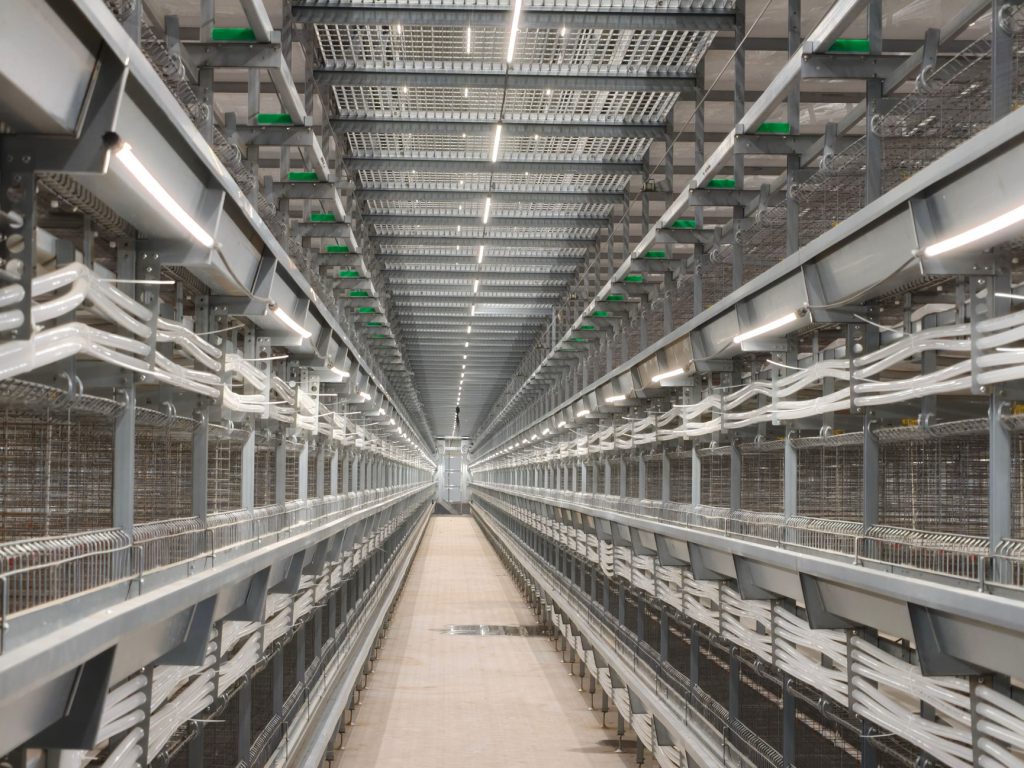
- Poultry LED Lights: Full-spectrum, 0–100% dimmable, 7W 48V DC, waterproof and dustproof
- Control Panels: SS304 enclosures for feeder, egg collector, manure removal, and fan control
- Manual Override: All critical systems can be operated manually during maintenance
—
Equipment List per House (40,000 Birds, 4-Tier H-Type)
| System | Key Components |
|---|---|
| Cage System | H-type 4-tier cages, HDG Q235 steel frame, wire mesh |
| Feeding | Feed silo + chain conveyor + travel feeder (4 per house) |
| Egg Collection | Nest conveyor + central egg conveyor + sorter |
| Climate Control | 8–10 exhaust fans + cooling pads + PLC 5.0 + IoT |
| Manure Removal | PP belts + horizontal/inclined conveyor |
| Lighting | Full-spectrum LED, 4–6 light rows per house |
| Electrical | Control panels + backup generator (20–30% reserve) |
—
200000 layer farm — Project Results
| Metric | Before (Traditional) | After (YMAKO System) |
|---|---|---|
| Daily Egg Production | ~150,000 | ~170,000 |
| Lay Rate | ~75% | ~85% |
| Labor per House | 6–8 workers | 3–4 workers |
| Feed Waste | 8–12% | 3–5% |
| Egg Breakage | 5–8% | 2–3% |
| Manure Handling | Manual, high odor | Automated belt, low odor |
For this 200000 layer farm project, these improvements translated to a significantly lower cost per egg and a projected equipment payback period of 18–24 months through labor savings, feed efficiency, and reduced egg loss.
—
FAQ
Q: How long did the 200000 layer farm project take from order to completion? A: The project timeline was approximately 4–5 months: 3–4 weeks for design and engineering, 6–8 weeks for manufacturing, 6–8 weeks for on-site installation and commissioning.
Q: Can this project be replicated for larger or smaller farms? A: Yes. The same system design scales from 20,000 to 500,000+ birds. YMAKO has completed projects at 30,000, 50,000, 100,000, and 200,000 bird capacities. Each project is customized to barn dimensions and local climate.
Q: Does the environmental control system work in hot and humid climates? A: Yes. This project was installed in tropical Southeast Asia with high temperature and humidity. The combination of tunnel ventilation, cellulose cooling pads, and PLC-controlled negative pressure management maintained house temperature within the optimal 22–28°C range even during peak heat.
Q: What kind of after-sales support does YMAKO provide? A: The project included on-site installation supervision, staff training, and a 12-month warranty. After-sales support continues via remote monitoring (IoT), video guidance, and spare parts dispatch from our Zhengzhou warehouse within 48 hours.
Q: How does the manure-to-fertilizer integration work? A: Manure collected by the belt system is dried and conveyed to a centralized processing area where it can be further processed into organic fertilizer using YMAKO’s fertilizer granulation equipment. This reduces waste disposal costs and creates an additional revenue stream.
—
Ready to Build Your 200,000-Layer Farm?
Contact YMAKO with your project requirements — bird count, barn dimensions, and climate conditions. We’ll provide a customized proposal based on your specific needs.
Final pricing depends on actual project configuration and customization requirements. Contact YMAKO for a personalized quote.