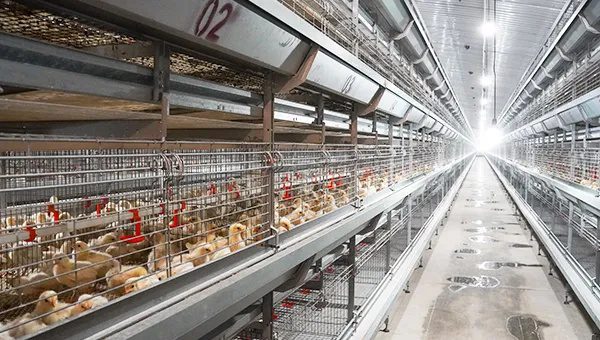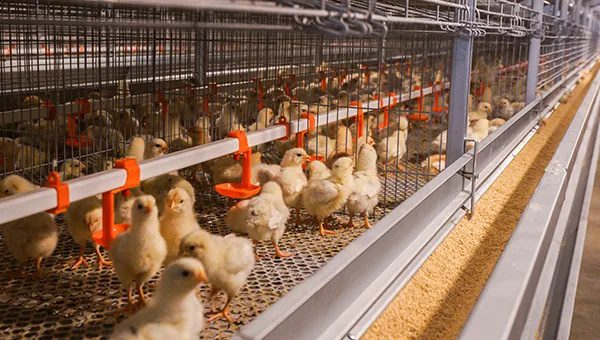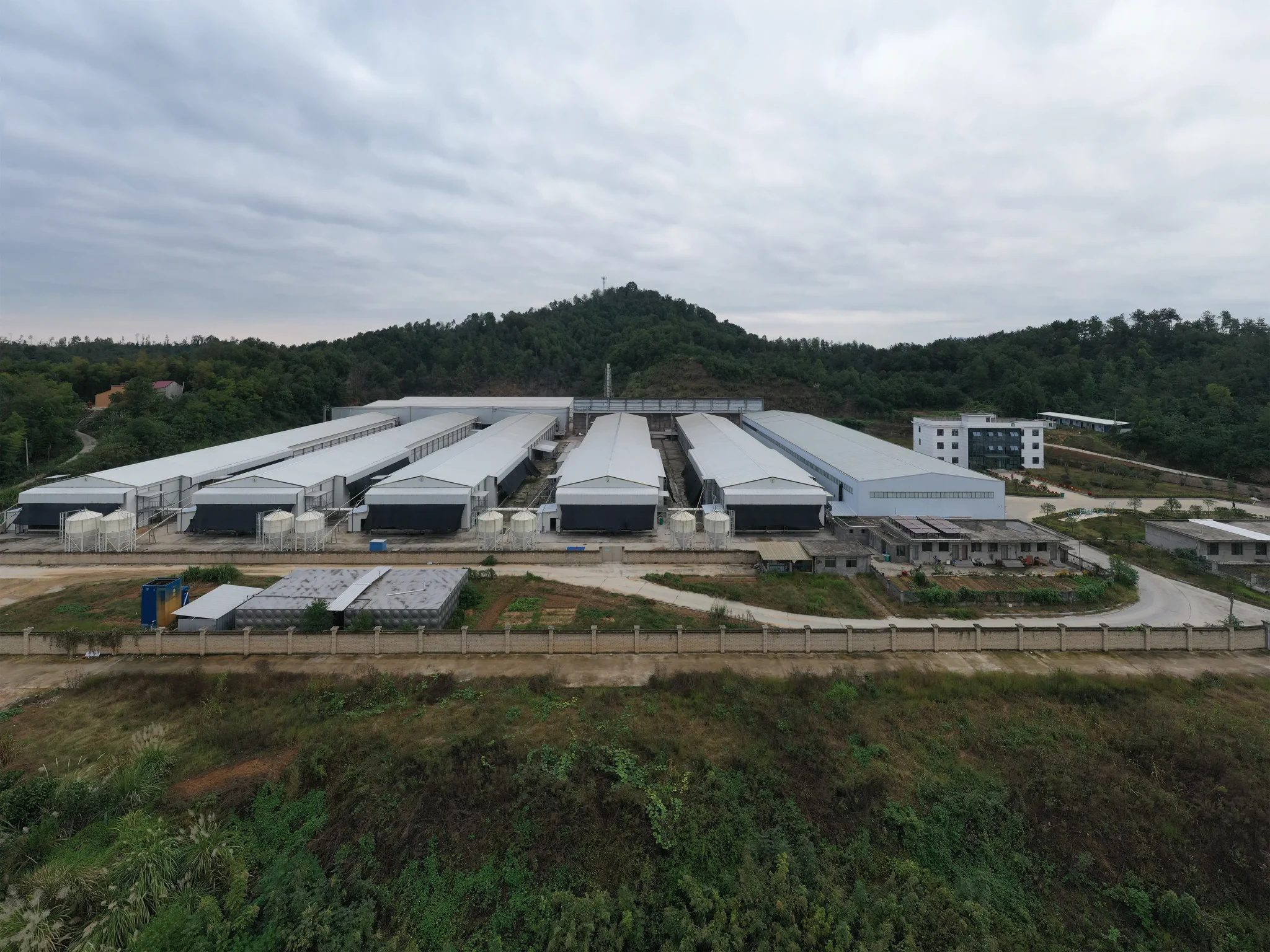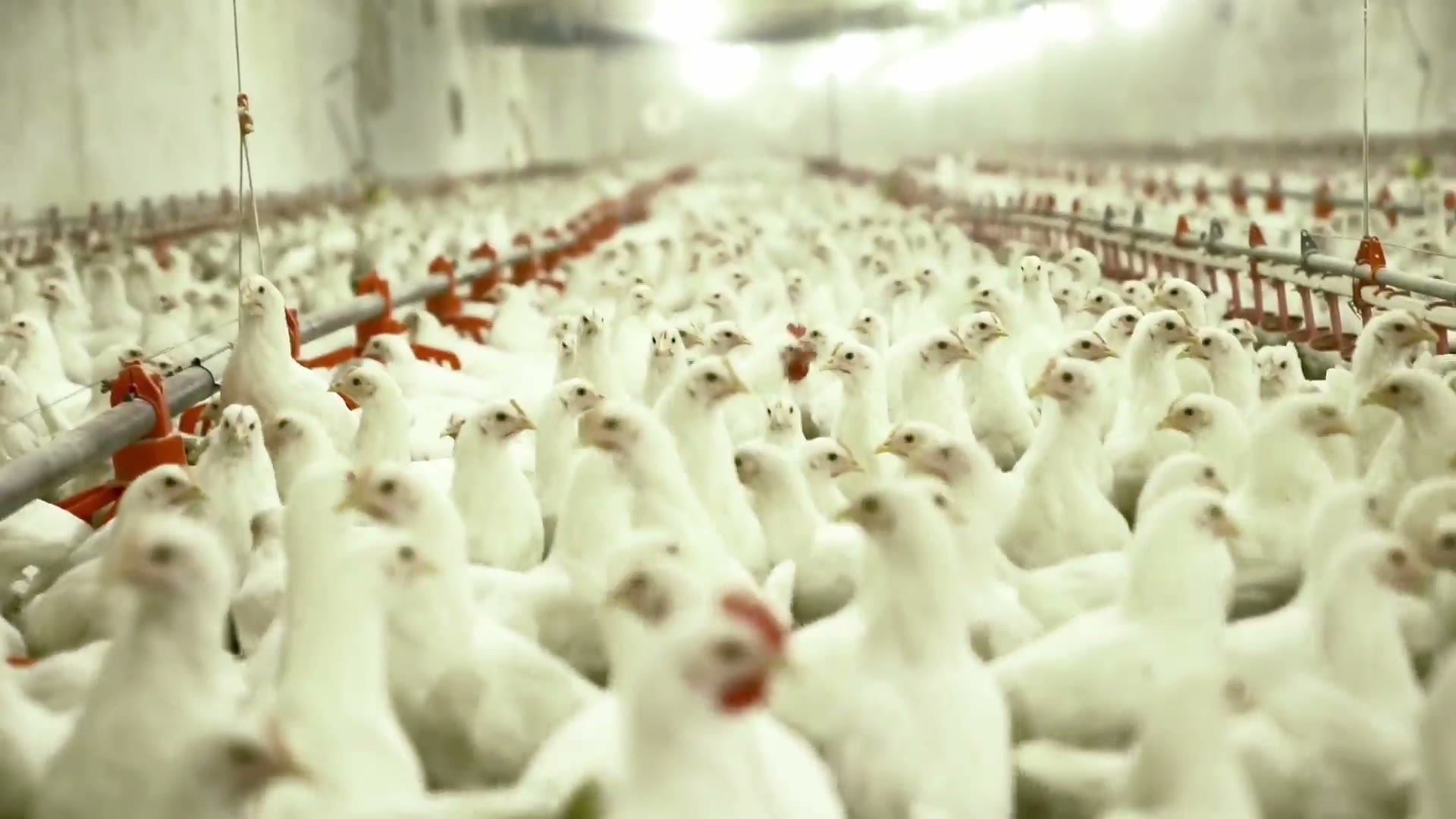
A poultry climate control system is the central nervous system of any modern poultry house. The right controller, fan, cooling pad, and heater combination decides whether your flock hits its growth or laying target — and whether a power blip, a heat wave, or a cold snap wipes out a percentage of your batch. This guide covers the components, the sizing math, and the management practices that turn a climate system from a piece of hardware into a measurable production advantage. Whether you run broilers, layers, or breeders, the framework below applies. All specifications referenced are YMAKO’s standard production spec (2026), and the ventilation standards match YMAKO’s poultry house design guide.
What Is a Poultry Climate Control System?
A poultry climate control system is a set of integrated hardware — sensors, controller, fans, cooling pads, heaters, and inlets — that automatically maintains target temperature, humidity, CO₂, and ammonia levels inside a poultry house. Modern systems use a PLC (programmable logic controller) that runs heating, cooling, and ventilation in a single coordinated program based on bird age and outdoor weather. YMAKO’s standard controller is based on the Israel AC2000, Mitsubishi PLC, or Siemens PLC, with HMI touchscreen and cloud monitoring.
For the full product line, see YMAKO poultry control system. The interaction of temperature, humidity, and airspeed in commercial houses is covered in the FAO climate-smart agriculture program, which provides general background on environmental control in livestock production.
Why Climate Control Is the Highest-ROI Investment in Your Poultry House
Climate is the single subsystem that most often makes or breaks production economics. Three data points illustrate why:
- Temperature window for laying hens: 18–25°C optimum, 13–28°C acceptable, 12–13°C winter house target. Day-night delta should stay ≤5°C (max 8°C). Outside this window, feed intake drops and laying performance falls.
- Ammonia threshold: NH₃ above 20 ppm in the house causes measurable damage to bird respiratory systems within 7–10 days. Climate control, paired with regular manure-belt scraping, keeps the house below this threshold.
- Energy trade-off: Industry data shows that in the comfort zone, 60–70% of feed energy goes to production and 30–40% to maintenance. Outside the comfort zone, that ratio flips — and feed conversion falls sharply.
Put together, the climate system typically returns its full capex in 12–24 months through mortality reduction and feed savings alone. For a deeper look at the design trade-offs, see the poultry equipment buyer’s guide climate chapter.
Core Components (YMAKO Standard Spec)
A working poultry climate control system has 6 components. Skipping any one breaks the system. All specifications below are YMAKO’s standard production spec:
- PLC controller: AC2000 / Mitsubishi PLC / Siemens PLC with HMI touchscreen, IP-rated enclosure, multilingual display, and remote monitoring via cloud platform (4G or Ethernet). Sends SMS alerts to the operator’s phone on out-of-band conditions.
- Temperature and humidity sensors: at least 2 per house, placed at bird level (not at human level). Calibrate annually. Combined temperature-humidity sensors feed the controller’s enthalpy-based cooling program.
- CO₂ and NH₃ sensors: digital sensors monitoring air quality, alarm thresholds at 2,500 ppm CO₂ and 20 ppm NH₃.
- Exhaust fans: YMAKO’s standard 1380×1380 mm fan, 430 stainless steel blades 1.2 mm thick × 1250–1270 mm long, 1.1 kW pure-copper motor (Jinda / Siemens), 38,000 m³/h domestic / 42,000 m³/h imported. Sized for 7–9 m³/h/kg at peak summer.
- Cooling pad: 15 cm thick cellulose, Jiamusi / Hunan / imported paper, in aluminum-alloy / plastic-steel / stainless steel frame. Sized 5–6 m² per 50-inch-equivalent fan. Pump and water distribution system included.
- Heaters: coal-electric / gas / biomass / air-source heat pump. Day-1 chick brooding needs 80–100 W/m², scaling down to 30 W/m² by week 3.
For the house geometry that holds these components, see poultry house design. For the layer cage and broiler cage integration, the cage layout defines airflow path and sensor placement.
Sizing the System: Broilers vs Layers vs Breeders
Airflow and cooling capacity scale with bird body weight, not bird count. YMAKO’s standard:
| Bird type | Body weight | Maximum ventilation (m³/h per kg) | Cooling pad (m² per 50-inch fan) | Brooding heater (W/m²) |
|---|---|---|---|---|
| Broiler, week 1 | ~0.2 kg | 2–3 | n/a | 80–100 |
| Broiler, week 6 (market) | ~2.5–3.0 kg | 7–9 (use 7.6 for adult) | 5–6 | n/a |
| Layer (peak) | ~1.8–2.2 kg | 7–9 (use 4.76 m³/h constant) | 5–6 | 30 (winter only) |
| Pullet | ~0.3–1.5 kg | 5–7 | 5–6 | 40 (winter only) |
For a 35,000-bird broiler house at 2 kg body weight in summer, peak airflow is 35,000 × 2 × 7.6 = 532,000 m³/h. At 38,000 m³/h per fan, that is approximately 14 fans running, paired with 14 × 5–6 = 70–84 m² of cooling pad. For a real reference, see the broiler farming in cage system design and sizing guide.
Tunnel vs Cross vs Natural Ventilation
There are three ventilation modes, and the YMAKO controller switches between them based on outdoor temperature:
- Minimum ventilation (0–18°C outdoor): small fans cycle on timer to bring in fresh air without chilling birds. Critical for ammonia and CO₂ control in winter. YMAKO’s standard: 0.9–1.2 m³/h/kg, with target 60% RH.
- Transitional ventilation (18–25°C outdoor): sidewall inlets open, fans ramp up. Removes heat without the energy cost of full tunnel.
- Tunnel ventilation (25°C+ outdoor): air enters through cooling pads at one end of the house and exits through large fans at the other end, creating a wind-chill effect that drops effective temperature 5–8°C. Air speed 1–3 m/s across the birds; inlet air speed 3.55–3.8 m/s entering the house, slowing rapidly after entry.
Pair layer or broiler cage houses with the right ventilation mode, and the controller handles the rest. YMAKO’s PLC ships with preset curves for broiler, layer, pullet, and breeder phases.
Monitoring and Alarms
A climate controller that runs unattended is a climate controller that will eventually kill birds. YMAKO’s standard monitoring layer:
- High/low temperature alarm at the controller and on the operator’s phone (cloud push + SMS).
- CO₂ alarm at 2,500 ppm; NH₃ alarm at 20 ppm.
- Power failure alarm tied to the auto-start backup generator (transfers within 10 seconds of mains loss).
- Water system alarms including water-reset and pressure-loss triggers.
- Motor protection: overheat and overload cutout on fan and feeder motors.
- Daily check: walk the house once a day, listen for stuck fans, smell for ammonia, and confirm the controller display matches the actual conditions.
Climate System Economics
For a 20,000-bird broiler house, a complete YMAKO climate system (controller + 1380×1380 mm fans + 15 cm cooling pads + heaters + sensors + install) is a meaningful share of the project’s capex. Annual benefit comes from three sources:
- Mortality reduction from stable temperature and ammonia control (NH₃ held below 20 ppm).
- Feed conversion improvement from keeping the flock inside the comfort zone (60–70% of feed energy to production versus 30–40% outside the zone).
- Better weight uniformity and lower condemnations at slaughter.
Across the YMAKO reference project base, the climate system typically returns its full capex in 12–24 months through these three channels. For exact figures on your project, contact our sales team with your house dimensions, bird type, and local climate.
FAQ
What is the difference between a climate controller and a thermostat?
A thermostat switches one device on or off at a set temperature. A climate controller runs an integrated program that coordinates heating, cooling, ventilation, lighting, and alarms based on temperature, humidity, CO₂, NH₃, bird age, and outdoor weather. YMAKO’s controllers are based on the Israel AC2000, Mitsubishi PLC, or Siemens PLC, with HMI touchscreen and cloud monitoring.
How many temperature sensors do I need per house?
Minimum 2, ideally 4 — placed at bird level, evenly distributed along the length of the house. A single sensor in a 100 m house cannot detect a hot spot 80 m away. YMAKO’s standard control system also includes CO₂ and NH₃ digital sensors for air-quality monitoring.
Can I retrofit a climate system into an existing poultry house?
Yes, in most cases. The main constraint is electrical capacity — adding fans and a controller often requires a service upgrade. A 100 m broiler house typically needs a 30–50 kW three-phase supply for the climate system alone. YMAKO’s engineering team can review your existing house and propose a retrofit package.
What is the maintenance schedule for a poultry climate control system?
Weekly: clean cooling pad, check fan blades and belts. Monthly: calibrate sensors, test alarms. Annually: replace fan belts, inspect electrical. The controller itself is largely maintenance-free for 8–10 years. YMAKO ships spare parts within 72 hours to 60+ countries from standard inventory.
Does a climate system work without internet?
Yes. The controller runs all programs locally. Internet adds remote monitoring and SMS alarm push, but is not required for normal operation. The YMAKO controller also auto-starts the backup generator within 10 seconds of mains loss, independent of network connectivity.
Which PLC platforms do you support?
YMAKO supplies control systems based on the Israel AC2000, Mitsubishi PLC, or Siemens PLC. All three are industrial-grade platforms with proven reliability in agricultural environments. The HMI touchscreen supports multilingual display; the cloud platform supports remote monitoring from phone or PC. For an industry-level perspective, the Wikipedia entry on PLCs covers the platform family we work with.
Need help sizing a climate system for a new or existing poultry house? Send us your house dimensions, bird type, and local climate for a free equipment list and sizing estimate. For a step-by-step view of how a climate system fits into a complete layer or broiler cage project, see the cluster guide poultry equipment buyer’s guide.