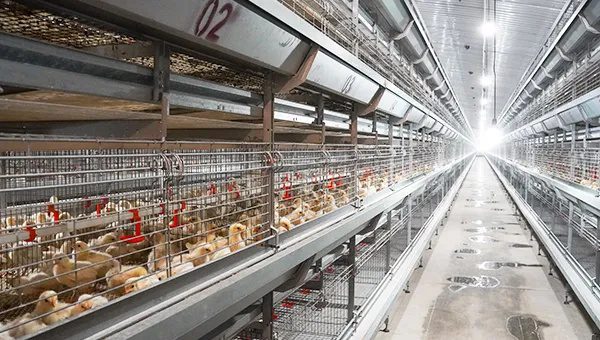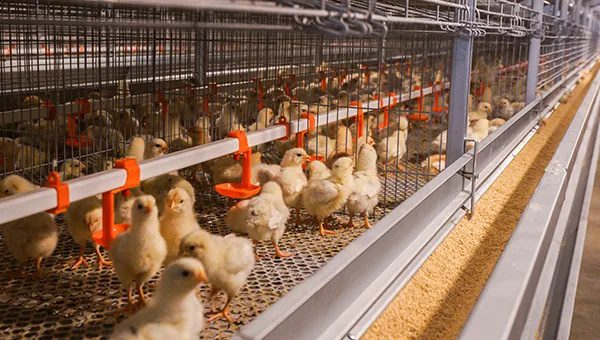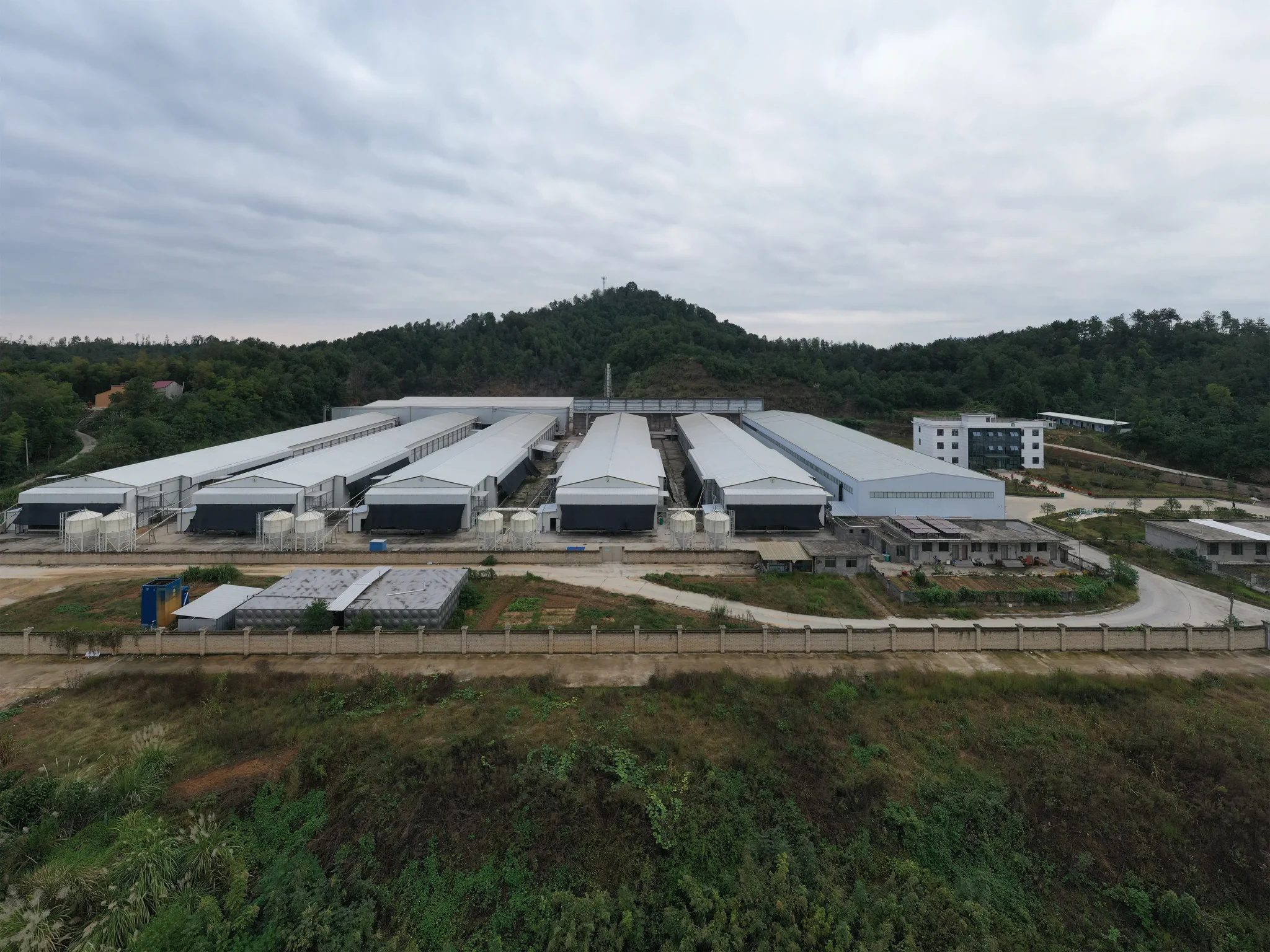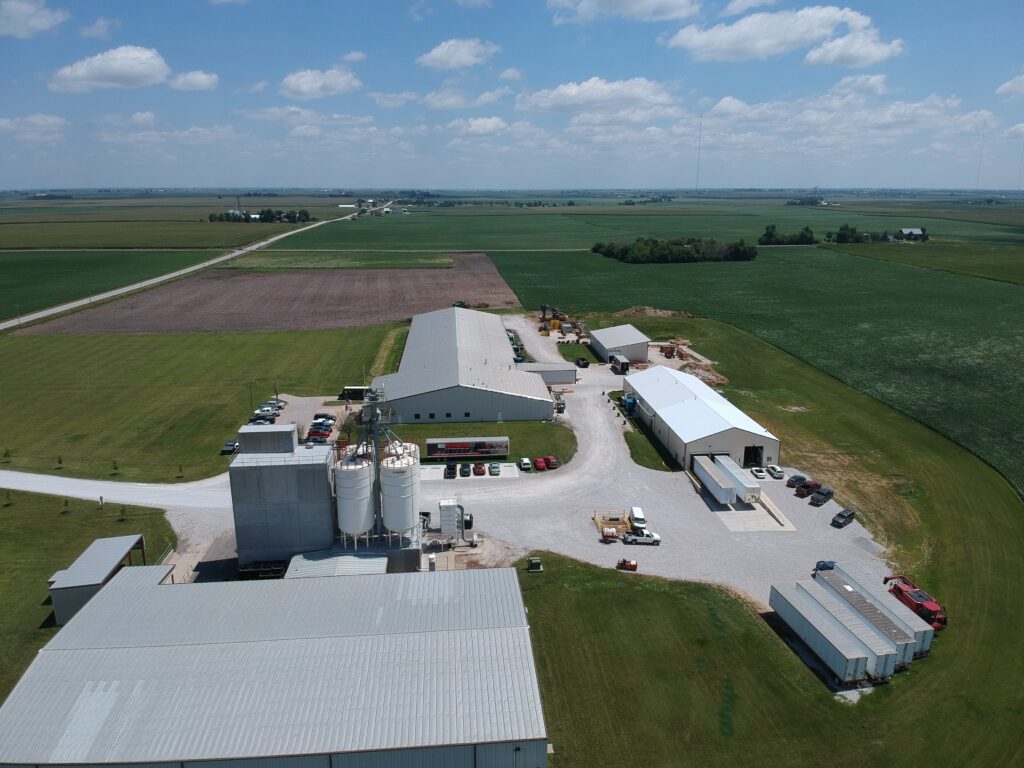
A layer cage system is the central equipment of any commercial egg-laying operation. The right design — A-Type or H-Type, the right number of tiers, the right feeding, drinking, and manure-handling subsystems — directly sets the ceiling on your flock’s annual egg yield, the floor on your labor cost, and the timeline for return on investment. This guide covers the design choices, the equipment list, the day-to-day production numbers, and the economics that a working layer cage system actually delivers, drawing on YMAKO’s standard product specifications (Equipment Specification, 2026) and a 2024 commercial 200,000-layer reference project in Southeast Asia.
What Is a Layer Cage System?
A layer cage system is a stack of galvanized wire cages organized in vertical tiers inside a poultry house, each cage holding 3 to 8 laying hens. The system provides automated or semi-automated feeding, drinking, egg collection, manure removal, and climate control, and is the dominant housing type for commercial egg production worldwide outside of cage-free and free-range operations. For a project-level perspective, see the YMAKO layer cage system overview.
Two geometries dominate the market:
- A-type layer cage — pyramid (stair-step) shape, 3 to 4 tiers, walkable aisle at the top. Best for small and mid-size farms (5,000–30,000 birds per house).
- H-type layer cage — fully enclosed, 5 to 8 tiers, walkable aisle between batteries. Best for large operations (50,000–500,000 birds per house) where land cost is high.
For project-level economics, see egg production systems. For guidance on choosing between geometries, see the companion article how to choose the right layer cage type, size, and supplier.
Egg Yield, Feed Conversion, and the Case for Modern Cage Systems
Three production advantages drive the decision for most commercial farms:
- Egg yield per hen. Modern enriched colony cages achieve 320+ eggs per hen per 72-week laying cycle under good management, versus 280–300 in aviary or floor systems. Higher yield comes from controlled environment, uniform feed access, and reduced stress from pecking-order aggression.
- Feed conversion. A layer in a controlled cage environment typically eats 105–115 g/day to produce a 60 g egg. The YMAKO chain feeding system (6.5 m/min, 1.1 kW reducer) keeps feed in front of the birds at a controlled rate, cutting waste 25–35% versus manual scattering.
- Labor efficiency. A 200,000-bird H-Type project on the YMAKO reference record runs with a small core team focused on inspection and egg handling — eggs from all houses reach the central egg warehouse within 30 minutes of laying. The same flock in an aviary would require several times the labor hours.
Standard YMAKO Cage Group Specifications
YMAKO produces two standard layer cage groups, with the same 275 g/m² hot-dip galvanized frame (uprights ≥2.0 mm, crossbeams ≥1.2 mm, egg guard ≥0.8 mm, door wire ≥⌀5.0 mm) across both:
| Type | Dimensions (L×D×H mm) | Configuration | Birds per group |
|---|---|---|---|
| H-Type layer | 1200 × 1250 × 690 | 4 groups | 32 |
| H-Type layer | 1800 × 1000 × 600 | 8 groups | 40 |
| A-Type 3-tier | 1950 × 350 × 470 | 3 tiers, 15 birds/tier | 15 |
| A-Type 4-tier | 1950 × 450 × 500 | 4 tiers, 20 birds/tier | 20 |
For larger A-Type projects, YMAKO also supplies 450 mm-depth group configurations: 3-tier 1830×2161×2586 mm at 120 birds per group, 4-tier 2030×2359×2785 mm at 160 birds per group. Density on a layer project is 22 birds/m² of floor area; per-bird footprint is 450 cm².
Tier Count and Eave Height
The cage tier count drives the eave height and the per-bird cost. YMAKO’s standard:
| Tier count | Minimum eave height | Layer spacing (3-tier / 4-tier) |
|---|---|---|
| 3-tier layer | ≥3.3 m | 57.5 cm (3-tier) |
| 4-tier layer | ≥4.0 m | 68 cm (4-tier) |
| 5-tier layer | ≥4.6 m | 55 cm (pullet spacing) |
| 6-tier layer | ≥5.5 m | — |
| 8-tier layer | ≥7.5 m | — |
For a 3-tier H-Type layer cage, the frame total height is 2.08 m, with the upper feed hopper at 2.4 m above floor. The bottom of the lowest cage is 350–420 mm above the floor, leaving working access for the manure belt.
Core Components of a Layer Cage System
A complete layer cage system is 9 integrated subsystems. A breakdown of any one cascades into yield loss, so treat the system as a single procurement decision rather than a parts list. All specifications below are YMAKO’s standard production spec (2026):
- Cage frame: 275 g/m² hot-dip galvanized steel, 2.0 mm uprights, 1.2 mm crossbeams, 0.8 mm egg guard, ⌀5.0 mm door wire. Cage depth 60–75 cm, height 45–50 cm for laying hens.
- Feeding system: chain or auger feeder with hopper, 1.1 kW reducer, feed-level control. Feed line 110 mm PVC or 110–140 mm HDG.
- Drinking system: ⌀50 mm PVC inlet, 22×22 mm or ⌀25 mm main line, SS304 valve needle and trigger nipple drinkers, pressure regulator, and daily flush line. 1 nipple per 4–5 hens.
- Egg collection: Nylon egg belt 3.0 mm thick under each tier, slope 15–20°. Central collection line 500 mm wide (W500 type) running at 40,000–45,000 eggs/hour per line. Optional C-type claws or green egg belt.
- Manure removal: PP manure belt 1.0–1.2 mm thick under each tier, ≤220 m length, ≤2.0 m/s, 1.5 kW drive motor. Scraper runs per batch on a schedule; cleaning the belt after every batch is standard.
- Climate control: PLC controller (AC2000 / Mitsubishi / Siemens), 1380×1380 mm exhaust fans at 38,000 m³/h each, 15 cm cooling pads, brooder heaters.
- Lighting: 48 V 7 W LED dimmable 0–100%, 14–16 hours light per day at 10–15 lux for laying.
- Backup power: Diesel generator with ATS — auto-start within 10 seconds of mains loss.
- Optional: Organic fertilizer system downstream of manure belts for a second revenue stream.
Sizing for 5K, 20K, 50K, 200K Bird Flocks
For a 72-week laying cycle, use this framework to size a single layer house. YMAKO’s engineering team uses width ≤16 m and length ~90 m as the standard cost-optimal house geometry:
| Flock size | House dimensions | Cage type | Tiers | Houses |
|---|---|---|---|---|
| 5,000 birds | ~50 × 8 m | A-type | 3 | 1 |
| 20,000 birds | ~60 × 12 m | A-type | 4 | 1 |
| 50,000 birds | ~90 × 15 m | H-type | 5–6 | 1 |
| 200,000 birds | ~90 × 15 m per house | H-type | 8 | 2–6 |
For a real-world 200,000-layer reference, YMAKO delivered a 2024 Southeast Asia project across 6 layer houses with central feeding, central egg collection, and the YMAKO Smart Layer Control platform. All 6 houses connect to a single egg warehouse with grading and packing equipment. See the full 200,000-layer case study.
Climate Targets for a Layer House
Layers perform best in a narrow environmental window. YMAKO’s standard layer-house targets:
- Optimum temperature: 18–25°C (acceptable 13–28°C)
- Winter house temperature: 12–13°C
- Day-night temperature difference: ≤5°C (max 8°C)
- Horizontal temperature difference across the house: ≤2°C
- Vertical temperature difference: ≤1°C
- Maximum ventilation (laying hen, 2 kg): 7–9 m³/kg/h
- Minimum ventilation (winter): 0.9–1.2 m³/kg/h
- CO₂ ceiling: 2,500 ppm
- NH₃ ceiling: 20 ppm
- Target relative humidity: 60%
YMAKO’s controller monitors temperature, humidity, CO₂, NH₃, water consumption, and feed consumption in real time, and sends out-of-band alerts to the operator’s phone via the cloud platform. Power-loss auto-start kicks the generator in within 10 seconds. The general science of laying hen production environments provides additional context for engineers tuning these parameters.
Egg Collection: Labor and Breakage
Manual egg collection requires more labor and increases the risk of cracks, dirt, and bacterial contamination. The YMAKO automatic egg collection line runs eggs from each cage row to a central warehouse on a 3.0 mm nylon egg belt at 6.5 m/min.
For a 200,000-bird project, a single central egg collection line can run up to 65,000 eggs per hour, with 6.5 m/min belt speed and soft brushes on gentle slopes to keep eggs safe. In the 2024 reference project, the central line connects 6 layer houses to a single egg warehouse — eggs from all houses reach the warehouse within 30 minutes of laying, supporting a clean and traceable supply.
The breakage rate on a properly tuned automatic system is below 0.3%, versus approximately 1.5% on manual collection. Labor reduction is 60–70%. Across a typical 52-week laying cycle, the labor savings alone typically cover the cost of the egg collection system within 18–24 months.
Manure as a Second Revenue Stream
Manure accumulation in a poultry house is the main source of ammonia, humidity, and respiratory-disease pressure. If manure is not removed on schedule, ammonia rises above the 20 ppm ceiling and respiratory issues follow within days. YMAKO’s PP belt system is sized to keep the house below this threshold on standard operation. See the dedicated poultry manure fertilizer system page for the integration design.
Once collected, the manure can either be composted on a pad or fed directly into a YMAKO organic fertilizer pellet line (1–50 t/h capacity). For a 50,000-bird layer house, daily manure output is several tons — enough to feed a small pellet line and generate a continuous secondary revenue stream from a feedstock that would otherwise be a disposal cost. For a real project example, see the Philippines automated layer breeding equipment case study.
Pullet-to-Lay Integration
The first 18 weeks of a laying hen’s life happen in a pullet cage, not a layer cage. YMAKO supplies a complete pullet-to-lay program with matched climate control:
- Pullet cage systems for 0–18 week rearing, with adjustable floor height and tighter mesh for chicks.
- Transfer at week 18 to the layer cage on the same site to minimize transport stress.
- Single PLC climate controller running both houses, with separate temperature curves for pullet (week 1 temperature drops from 33–35°C brooding) and layer (18–25°C target) phases.
Common Mistakes in Layer Cage System Planning
- Skipping the egg collection table at the end of the egg belt. Without proper transfer to the central line, breakage at the collection point runs 3–5%, versus 0.3% with a properly tuned automatic system.
- Undersizing fans for hot climate. YMAKO’s rule is 7–9 m³/h/kg at peak summer, with full tunnel ventilation. Each 1380×1380 mm fan moves 38,000 m³/h.
- Mixing pullet and layer houses in the same air space. Pullet vaccination programs generate dust and aerosolized virus that can disrupt an adjacent layer flock’s laying cycle.
- Not budgeting for spare parts. Nipple drinkers, egg belts, and PP manure belts are wear items. Set aside 3–5% of capex as a year-1 spare-parts kit. YMAKO ships spare parts within 72 hours to 60+ countries from standard inventory.
- House geometry outside the 13–16 m width and ~90 m length range. This is YMAKO’s cost-optimal geometry; configurations outside this band see sharp per-bird cost increases.
FAQ
How many laying hens fit in one YMAKO H-Type battery?
YMAKO’s standard H-Type layer groups are 1200×1250×690 mm (4 groups, 32 birds/group) and 1800×1000×600 mm (8 groups, 40 birds/group). A 5-tier battery with 8 sections holds approximately 4,000–6,400 hens. A 50,000-bird house typically uses 8–12 such batteries arranged in two rows.
What is the difference between a layer cage and a broiler cage?
Layer cages have a sloped floor and an egg belt underneath; broiler cages have a flat floor. Layer cages have larger cell area per bird (450 cm²) versus broilers, and use different feeding and drinking density. YMAKO’s broiler cage group is 1250×1000×600 mm, open-top, only used for broilers; the layer groups are 1200×1250×690 and 1800×1000×600. For a broiler-specific design breakdown, see the broiler farming in cage system design and sizing guide.
What is the lifespan of a YMAKO layer cage?
With 275 g/m² hot-dip galvanization on the cage frame (uprights ≥2.0 mm), the frame is rated for 15+ years in normal poultry house conditions. Feeding, drinking, and egg-belt subsystems typically need 5–7 year component replacement cycles; PP manure belts are a per-batch wear item.
How long does installation take?
YMAKO’s standard cycle is 23–26 days to first-bird placement and 27–30 days to acceptance for both layer and broiler projects. Add sea freight and customs clearance on top for export projects — typical end-to-end from purchase order to first bird is 3–6 months.
What PLC controllers do you support?
YMAKO supplies control systems based on the Israel AC2000, Mitsubishi PLC, or Siemens PLC, with HMI touchscreen. The controller runs heating, ventilation, cooling pads, lighting, and alarm logic, with cloud monitoring and SMS alerts to the operator’s phone.
Can I see a working system before I order?
Yes. YMAKO maintains a 200,000-layer reference project in Southeast Asia (delivered 2024, 6 houses + central egg collection) and can arrange visits for serious buyers. Project reference list available on request.
What are the payment and delivery terms?
30% deposit to start production, 70% before shipment (TT transfer or letter of credit at sight). Delivery is 15–45 days from deposit, depending on order size and current production schedule. Spare parts ship within 72 hours to 60+ countries from standard inventory.
Planning a new layer farm or expanding an existing one? Send us your target bird count, climate, and timeline for a free house layout plan and equipment quote. For a deeper look at the underlying economics, see the layer cage system ROI and setup guide.